
Ten years after calling for a boardroom revolution, the world around the board table has changed profoundly. But have the fundamental qualities of good boards and good leadership really changed?
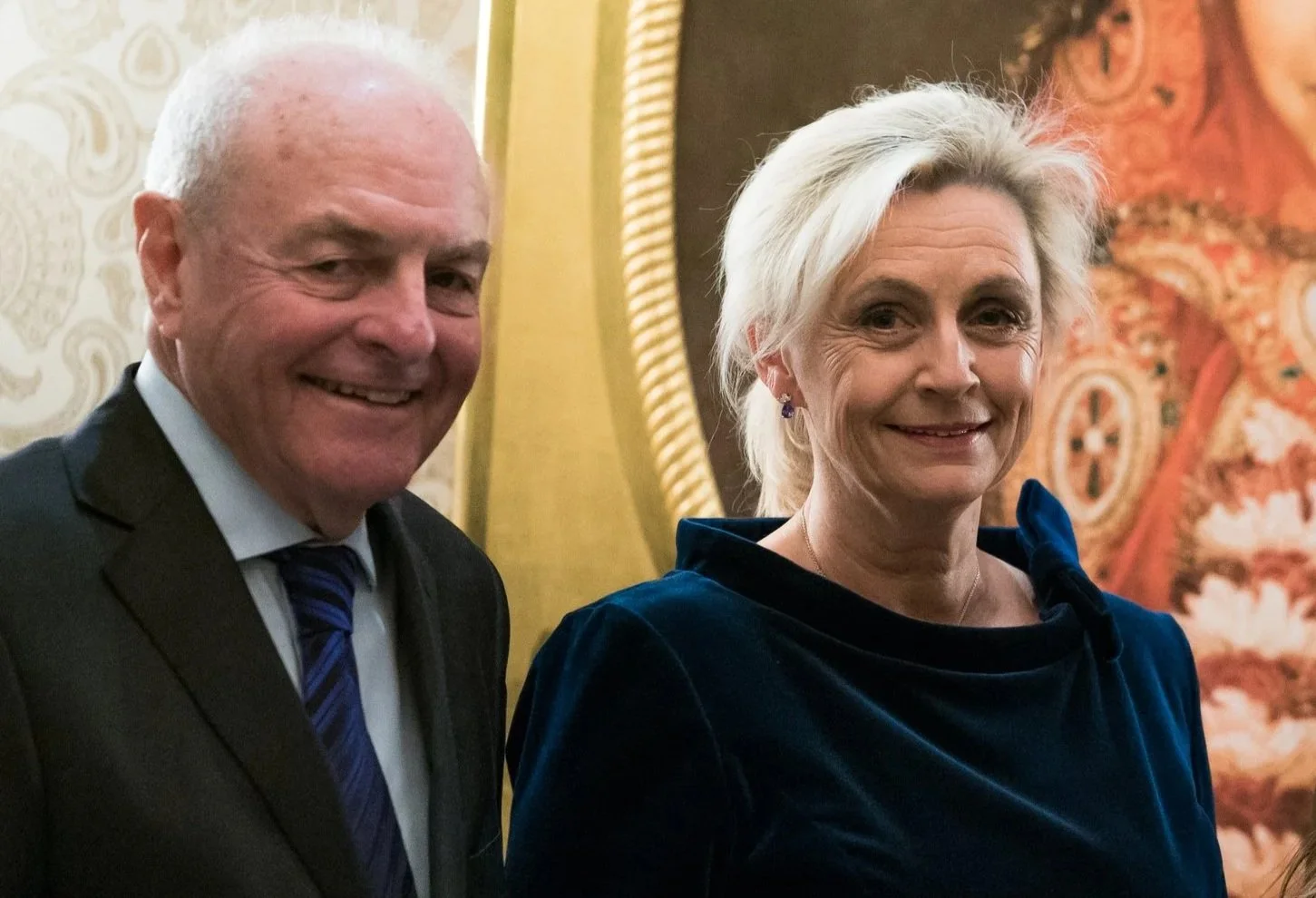
Mervyn King and I, Oslo 2017
Leading through uncertainty
Boards today are navigating an environment where uncertainty is no longer an occasional disruption. It is becoming a permanent feature of leadership.
Geopolitical tensions, shifting trade relationships, rapid advances in artificial intelligence and changing regulation are increasingly interconnected. Developments that once seemed distant from the boardroom now have immediate strategic consequences.
For boards, the question is no longer simply how to respond to uncertainty.
It is how to lead through it.
Oversight, accountability and control remain fundamental to good governance. But today's environment demands something more: the ability to challenge assumptions, anticipate change and make difficult decisions without having all the answers.
What geopolitical developments could fundamentally alter our strategy? How might AI reshape our business model? And does the board have the diversity of perspectives and experience needed to recognise what may be coming?
These are governance questions. But they are also leadership questions.
Ten years after calling for a boardroom revolution
When I founded FutureBoards in 2016, my ambition was to contribute to better leadership and better board work. I called for a boardroom revolution – and wanted to create an arena where we could talk about, and with, the people making some of the most consequential decisions in business.
Not only about financial performance, structures and processes.
But about the people behind the roles. About values, attitudes and responsibility.
Because ultimately, it is people who shape our companies – and the societies we live in.
Ten years later, I'm not sure we have had a boardroom revolution.
But the world around the board table has certainly changed.
We have lived through a pandemic. We have war in Europe and an increasingly unpredictable geopolitical landscape. And artificial intelligence is challenging established assumptions about business models, competitiveness and decision-making itself.
Yet amid all this change, something is strikingly constant.
Reports about the future of leadership repeatedly point to the same qualities:
Judgement. The ability to build trust. Courage to make decisions under uncertainty. Integrity when nobody has all the answers.
Aren't these, in fact, the qualities we have always wanted from good leaders?
Technology is transforming how we work, how we analyse information and how decisions are made.
But it does not relieve leaders and boards of their responsibility for the choices they make.
That responsibility remains human.
The value of the board community
Perhaps this makes the original idea behind FutureBoards more relevant today than it was ten years ago.
No individual director – and no individual board – has all the answers.
Over the past decade, FutureBoards has brought together chairs, directors, executives, investors, researchers and governance experts across companies, sectors and national borders.
And I've become increasingly convinced that the real value of such a community is not simply who belongs to it.
It is what happens when people with different experiences and perspectives actually talk to one another.
A question from a chair in one country can challenge established thinking in another. Experience from one industry can reveal risks or opportunities in an entirely different sector. And sometimes, the most valuable contribution is simply a question nobody else thought to ask.
These conversations do not eliminate uncertainty. But they can help us see things differently, challenge our assumptions and make better-informed decisions.
That is what FutureBoards has always been about.
Inspired by others – and grateful for the journey
Of course, FutureBoards would not be what it is today without the many people who have contributed along the way.
I have been fortunate to work with and learn from extraordinary people across the world – people who have challenged my thinking, generously shared their knowledge and helped create the conversations that make this community valuable.
There are far too many to mention individually, but I am deeply grateful to all of you.
I would, however, like to extend a particularly warm thank you to my good friend Professor Mervyn King, Chair Emeritus of the King Committee in South Africa.
Mervyn's lifelong commitment to advancing good corporate governance, through the King Reports and initiatives including the Good Governance Academy, has profoundly influenced my own thinking.
His emphasis on ethical and effective leadership, integrated thinking and long-term value creation is a powerful reminder that good governance is about much more than compliance.
It is about how organisations are led, how decisions are made and the impact those decisions have on people and society.
Thank you, Mervyn, for your friendship, inspiration and unwavering commitment to better governance.
And thank you to everyone who has been part of the FutureBoards journey.
The next ten years
So, ten years after calling for a boardroom revolution, do we still need one?
Perhaps.
But today, I would frame the ambition somewhat differently.
We don't simply need more governance.
We need better governance.
Boards that are curious enough to keep learning. Independent enough to challenge. Diverse enough to see what others may miss. And courageous enough to act when leadership is required.
As FutureBoards enters its second decade, I hope we can strengthen our international community further – creating more opportunities to exchange experiences, challenge established thinking and explore the questions shaping the future of boards and corporate governance.
Not because we expect to find all the answers together.
But because we can help each other ask better questions.
What will define a great board in the next ten years?
I would genuinely like to hear your thoughts.
After ten years of FutureBoards, one thing remains clear to me: better boards are not built in isolation.
They are built through people, perspectives and dialogue.
Turid Elisabeth Solvang
Founder, FutureBoards
October 2026